

Short on time?
Get the key points of this article in a few lines.
AI-generated from this article only. It can make mistakes and is not financial, tax, legal or investment advice.
Eligibility testing answers two questions about every asset pledged into a collateral pool: does it count, and how much does it count for. Those are separate tests, and confusing them is how borrowing bases break.
What Collateral Pool Eligibility Testing Actually Is
Eligibility testing is rule-driven screening that decides whether an asset may enter a pledged pool and what borrowing value it carries once inside.
The same mechanics run in two different worlds: central bank credit facilities such as the Fed’s Discount Window and Eurosystem monetary policy operations, and private wholesale and structured pools including asset-based lending facilities, warehouse lines, back leverage, and securitizations.
Most of these arrangements pool collateral rather than earmark it against a specific advance. Under the Eurosystem framework, pooled collateral must stay at least equal to the counterparty’s outstanding credit, with eligible assets added or withdrawn as long as that coverage holds.
Private credit facilities work the same way, which is why testing is continuous rather than a one-time onboarding check. Ratings migrate, borrowers default, loans amortize, and the pool changes shape every reporting cycle.
Three mechanics do distinct jobs:
- Eligibility is binary. The asset is in or out.
- Haircut or advance rate assigns value to what passed.
- Concentration limits govern the shape of the pool as a whole.
| Test | Question It Answers | Effect on Borrowing Base |
|---|---|---|
| Eligibility | Does this asset qualify for the collateral pool? | Asset is either included or excluded |
| Haircut / Advance Rate | How much borrowing value does the eligible asset receive? | Reduces the asset’s recognized value |
| Concentration Limit | Does the pool contain too much exposure to one category? | Excess exposure may receive reduced or zero borrowing value |
The Criteria Every Rulebook Tests
| Eligibility Criterion | What Is Tested | Examples |
|---|---|---|
| Asset type | Whether the asset falls within an approved collateral category | Securities, whole loans, receivables, credit claims |
| Credit quality | Whether the asset or obligor meets the required credit standard | Agency ratings, DSCR, internal credit grades |
| Currency & jurisdiction | Whether the asset meets geographic and legal requirements | Approved currencies, countries, governing law |
| Maturity | Whether the remaining term fits the facility’s rules | Minimum/maximum maturity, tenor mismatch |
| Liquidity & size | Whether the asset meets minimum size or liquidity requirements | Issue size, obligor balance thresholds |
| Documentation & perfectibility | Whether ownership, assignment, and security rights are properly documented | Complete loan file, assignability, perfected lien |
| Industry / business type | Whether the obligor’s line of business is on the lender’s excluded list | Exclusions screened by industry code, e.g. NAICS |
Marketable vs Non-Marketable Collateral: Why Loans Are Harder
Securities test against observable market data. Loans have no market price, so eligibility leans on document review, borrower financials, and servicer-reported data. Data quality becomes the binding constraint: a loan can be economically sound and still fail because a field is missing or a collateral code was mapped inconsistently across two systems.
Litigation finance, merchant cash advance, specialty finance, forward flow agreements, delayed draw term loans, and revolvers each carry bespoke criteria that generic engines miss.
How the Testing Process Runs, Step by Step
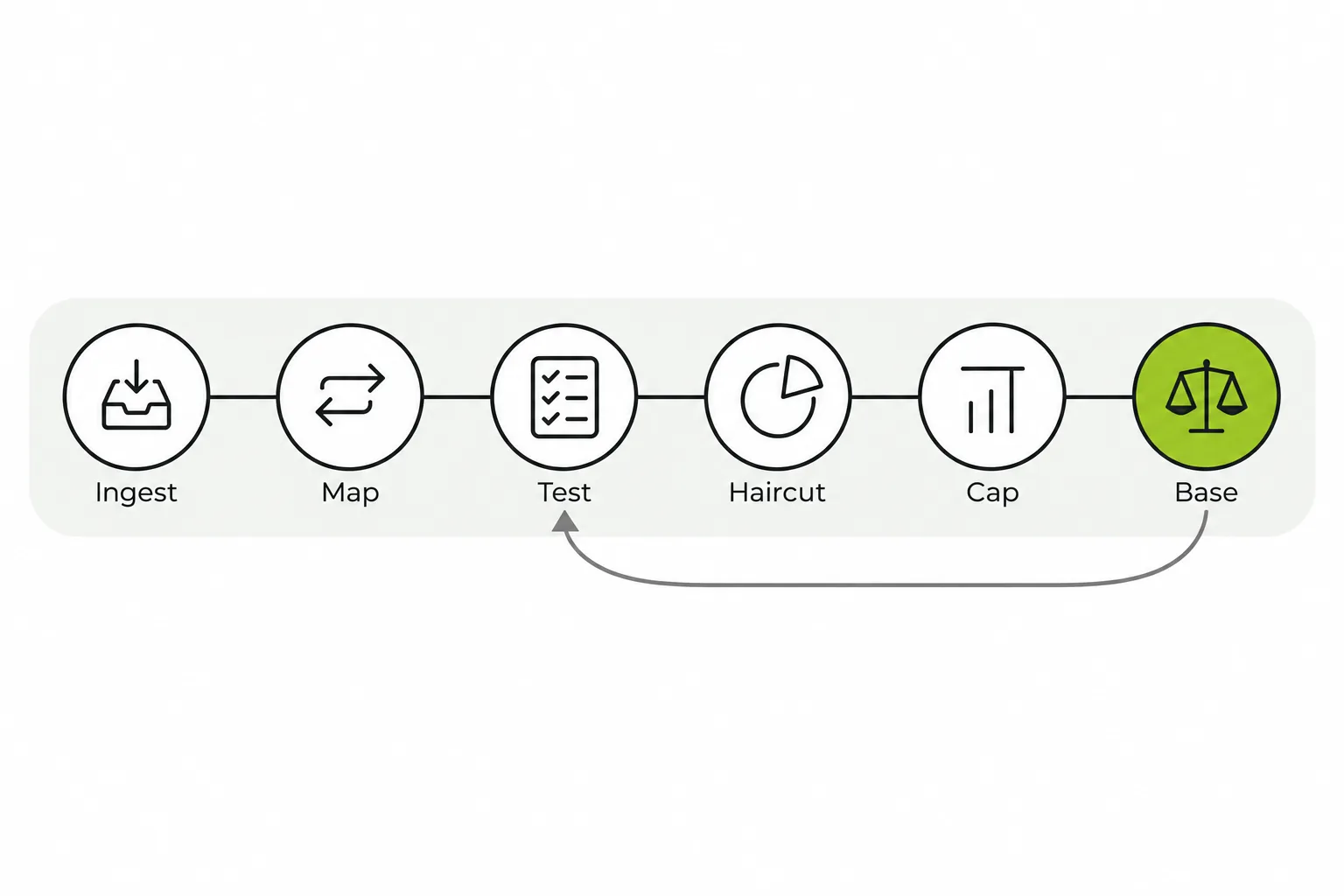
1. Ingestion and aggregation. Daily or monthly feeds of positions, prices, ratings, borrower reporting, and servicer tapes.
2. Normalization and mapping. Reconciling collateral codes, obligor identifiers, and field definitions across sources. No rule fires cleanly on unmapped data.
3. Rule execution. An automated engine runs the credit agreement’s eligibility criteria clause by clause and flags exceptions.
4. Haircut application. Passing assets are discounted for risk. A $100 asset at a 5% haircut supports $95 of credit. At the Discount Window, margins for securities are set by asset type, credit rating, and duration.
5. Concentration limit check. Caps by obligor, issuer, sector, rating band, geography, and asset type, applied after eligibility.
6. Borrowing base output and deficiency test. Eligible value net of haircuts and excess concentration, compared with outstanding credit.
7. Exception reporting and cure. Paydown, substitution, or a contractual cure period when a deficiency appears.
Haircuts and Concentration Limits
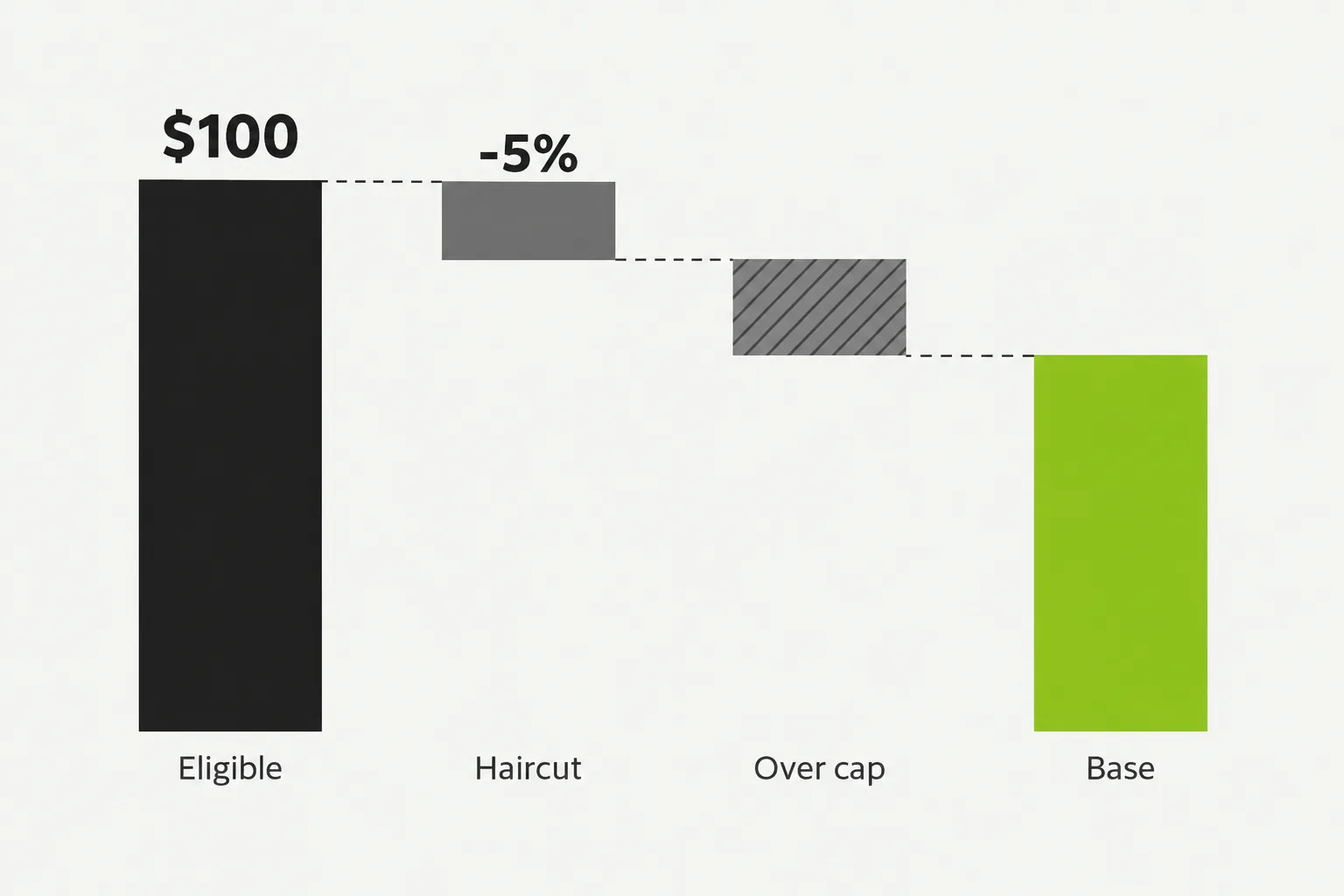
Haircuts respond to price volatility, maturity, credit quality, liquidity, and valuation uncertainty. Central bank schedules are published and tiered; private facility advance rates are negotiated deal by deal and rarely comparable across managers. In practice, private credit facilities use bespoke frameworks loosely derived from these much stricter central bank standards, modified to fit the collateral, the borrower and the deal.
Concentration limits catch what eligibility does not.
An asset can pass every eligibility test and still contribute nothing, because the portion above an obligor or sector cap is stripped out of the borrowing base.
Macro conditions bite here: a wave of downgrades or sector stress can shrink borrowing capacity without a single asset being sold.
Common Failure Points in Eligibility Testing
- Spreadsheet-based testing that cannot be audited or reproduced two quarters later.
- Stale or manually keyed servicer data driving a live borrowing base.
- Credit agreement language read differently by lender and borrower, with no independent arbiter.
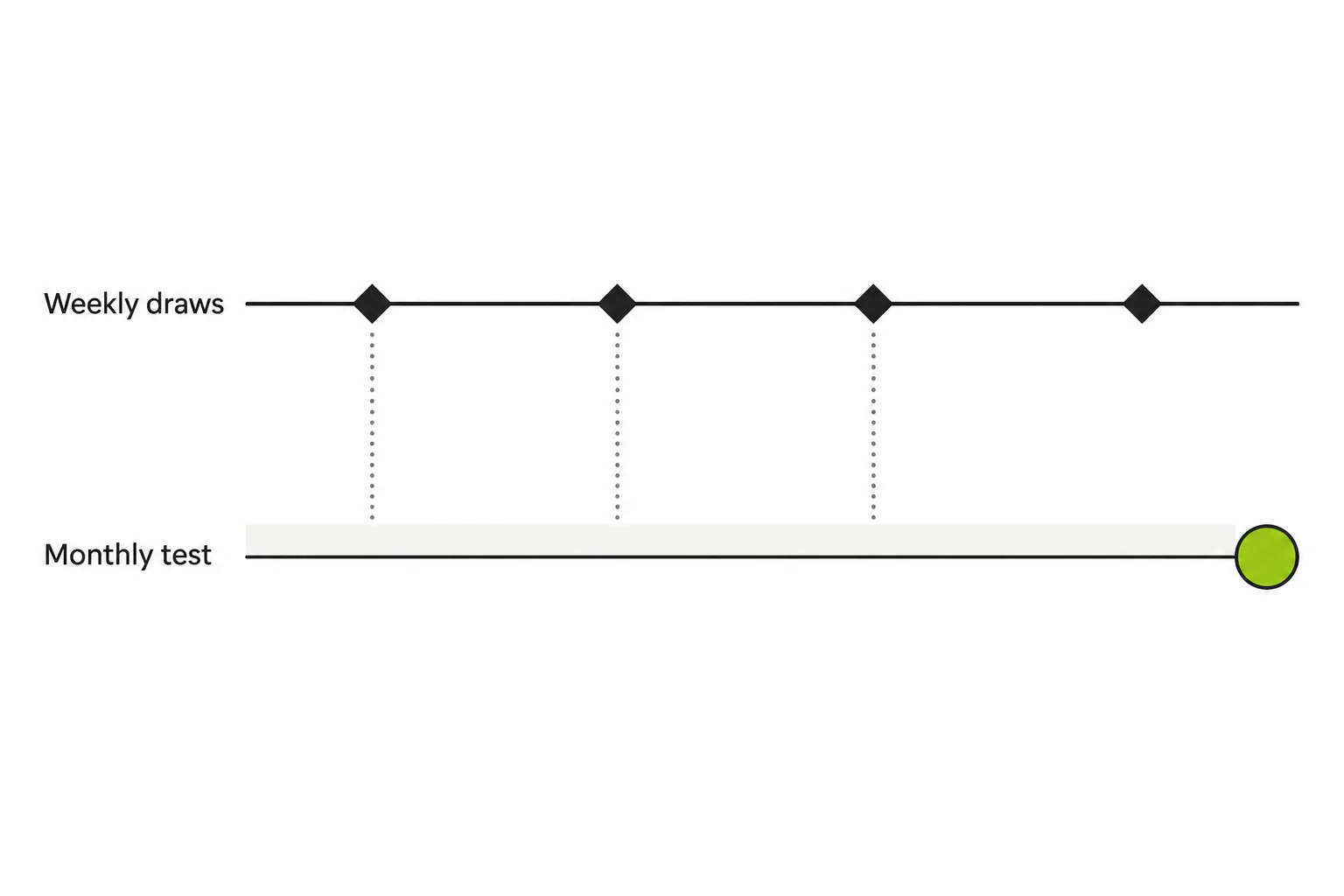
- Cadence mismatched to collateral velocity. Because borrowing base certificate frequency is set by the loan agreement, a monthly test against weekly draws is contractually fine and operationally blind.
- Scaling by headcount as portfolios and strategy counts grow.
Building a Process That Holds Up
Codify the credit agreement into machine-readable rules with an audit trail running back to the specific clause. Keep ingestion, calculation, and reporting separable so each can be verified on its own.
Then add external verification: an outside calculation agent checking eligibility, concentration, and the borrowing base gives lenders, investors, and boards a check that the manager is not grading its own work.
Oak Branch Advisors runs collateral pool testing, eligibility and concentration testing, borrowing base calculation, and transaction surveillance for private credit managers across the US and North America, including complex and esoteric structures where off-the-shelf systems stop short.
If you are testing collateral in spreadsheets or adding people to keep pace with new strategies, a conversation about how your pool is monitored today is a reasonable place to start.
Frequently asked questions
How often should a collateral pool be tested?
What is the difference between a haircut and an advance rate?
Can an ineligible asset stay in the pool?
How do central bank rules differ from private facility rules?
AI Ask about this article
Answers come only from the article above. For your own facility, request a consultation.
AI-generated from this article only. It can make mistakes and is not financial, tax, legal or investment advice.
Keep reading
All articles →


The team behind these articles
Reviewed by people who run private credit operations
Every article on this blog is researched, reviewed and edited by the Oak Branch team before it is published: senior professionals across private credit, asset-based lending, structured finance, operations and technology.
- Reviewed for accuracy by senior practitioners
- Figures linked to their published sources
- Written for the people who run facilities day to day
About Oak Branch Advisors
Technology-enabled middle office support, loan administration and portfolio surveillance for private credit funds, lenders and borrowers, powered by our PCS/1 platform.